
The Pentagon is running an AI propaganda mill targeting Latin America

The Pentagon is running an AI propaganda mill targeting Latin America

The Pentagon is using an AI-generated propaganda website, La Tilde, to target Latin American audiences with pro-U.S. military messaging, disguised as independent news, according to an investigation by The Intercept. Funded by the U.S. government and operated under U.S. Special Operations Command South, the platform blends AI-written content and promotional articles that glorify American military operations while downplaying concerns over sovereignty, with the goal of expanding U.S. influence in the region through subtle, scalable disinformation. Despite a legally required but easily overlooked disclaimer about its government funding, the site’s poor AI quality and lack of journalistic transparency undermine its credibility, reflecting a broader shift toward automated, low-cost influence operations.


Comments ·

Cloudflare CEO is lying to you about the bot traffic jump

Cloudflare's CEO misrepresented bot traffic data by selectively using HTML-only metrics to falsely claim bots have surpassed human traffic online, while the company's own all-traffic data shows humans still make up about two-thirds of internet activity; the argument further alleges that the increase is driven not by "agentic" traffic as claimed, but by AI training scrapers, and that the misleading narrative promotes Cloudflare’s pay-to-crawl service, amounting to a sales-driven distortion of reality.

Comments ·

Did Claude increase bugs in rsync?

A statistical analysis of bug rates in rsync releases finds no evidence that Claude-assisted development increased bugs; both releases with Claude commits fall within the historical middle 50% of bug rates, with a permutation test yielding a 46% p-value—indicating no statistically unusual increase in bugs—and the data show the highest bug rate in rsync history occurred in a pre-Claude release (v3.4.1), suggesting the backlash was driven more by anti-AI sentiment than empirical performance.

Comments ·
Gemma 4 QAT models: Optimizing compression for mobile and laptop efficiency

Gemma 4 QAT models: Optimizing compression for mobile and laptop efficiency

Google has released new Quantization-Aware Training (QAT) checkpoints for Gemma 4, optimizing the models for efficient local deployment on mobile and consumer hardware by reducing memory usage while preserving quality; these include standard Q4_0 and a custom mobile-optimized quantization format that cuts the Gemma 4 E2B model’s memory footprint to under 1 GB, enabling smooth on-device performance through techniques like static activations, channel-wise quantization, targeted 2-bit compression, and optimized caches. The models are available via Hugging Face and supported by tools like llama.cpp, vLLM, Ollama, LM Studio, LiteRT-LM, and Transformers.js for easy integration across desktop, mobile, and web platforms.

Comments ·
Cooldown Support for Ruby Bundler

Cooldown Support for Ruby Bundler

Bundler 4.0.13 introduces a security feature called "cooldown," which prevents dependencies from being resolved to newly published gem versions until they have been public for a specified number of days (e.g., 7 days), reducing the risk of supply-chain attacks that exploit the immediate window after a compromise. The feature is opt-in, time-based, and leverages per-version created_at timestamps from rubygems.org's v2 compact index, skipping versions that are too new to have undergone scrutiny while allowing overrides via --cooldown 0 for urgent updates. Cooldown can be configured per-source in the Gemfile, globally, or via environment variables, with command-line flags taking precedence, and integrates with existing tools like bundle outdated to show held-back versions. It complements other rubygems.org security measures such as 2FA, trusted publishing, AI-powered scanning, and real-time password breach detection, forming part of a layered defense strategy to make dependency resolution safer by default.

Comments ·

I tested every IP KVM in my Homelab

The article reviews a wide range of IP KVMs (Keyboard, Video, Mouse over IP) used for remote system access, focusing on their features, pricing, security implications, and use cases beyond traditional remote desktop tools. The author highlights that IP KVMs are valuable for accessing machines at the BIOS level or when systems are unresponsive, and discusses models from PiKVM, BliKVM, GL-iNet, Sipeed, JetKVM, TinyPilot, and others, noting trade-offs in cost, performance, open-source support, and security. A key concern emphasized is the potential for security vulnerabilities, illustrated by one device triggering an FBI visit due to suspected espionage use. The market is shown to be diverse and rapidly evolving, with options ranging from $25 DIY devices to $400+ commercial units, catering to homelab enthusiasts and enterprise users alike.

Comments ·
pg_durable: Microsoft open sources in-database durable execution

pg_durable: Microsoft open sources in-database durable execution

Microsoft has open-sourced pg_durable, a PostgreSQL extension that enables durable, fault-tolerant execution of long-running SQL workflows directly within the database by automatically checkpointing progress and resuming after failures, eliminating the need for external orchestration tools like Airflow or cron-based job systems. It allows backend and data engineers to define complex workflows—such as data pipelines, maintenance routines, or AI vector embedding tasks—in SQL, with built-in resilience to crashes, restarts, and partial failures, while keeping workflow state co-located with data for auditability and simplicity. The extension runs entirely inside Postgres using a background worker and leverages Rust-based libraries (duroxide and duroxide-pg) for orchestration and state persistence, requiring no additional infrastructure. It is ideal for teams seeking to simplify their architecture by replacing distributed glue logic with SQL-native, database-ensured reliability, though it is not suited for workflows requiring sub-millisecond latency or extensive non-SQL application logic.

Comments ·
databow: a Rust CLI to query any database with an ADBC driver

databow: a Rust CLI to query any database with an ADBC driver

databow is an open-source Rust CLI tool that provides a unified, modern interface for querying any database with an ADBC driver, enabling efficient, columnar data transfer via the Apache Arrow format; it supports over 30 databases, offers a feature-rich interactive SQL shell, export to multiple formats, scripting capabilities, and connection profiling, all through a single lightweight binary.

Comments ·
Leap in DNA synthesis slashes time to build new genetic sequences

Leap in DNA synthesis slashes time to build new genetic sequences

A new DNA synthesis technique called Sidewinder enables fast, accurate, and low-cost assembly of long genetic sequences in a single test tube, overcoming a major bottleneck in synthetic biology by allowing researchers to physically build complex DNA designs—such as those generated by generative AI—at a speed and scale previously unattainable, with potential applications in drug discovery, bioengineering, and artificial genome construction.

Comments ·
Conventional Commits encourages focus on the wrong things

Conventional Commits encourages focus on the wrong things

The article argues that Conventional Commits is a flawed standard that prioritizes unimportant metadata like commit type (e.g., "fix", "feat") over the more critical scope (the part of the system changed), which is what developers actually need when reading commit history. It contends that Conventional Commits fails to deliver on its promises—such as automated changelogs and versioning—because it conflates developer-focused commit logs with user-facing release notes, leading to subpar outcomes for both. The author advocates for a return to scope-prefixed commit messages, as used by major open-source projects like Linux, Git, and Go, where the focus is on clearly identifying the affected component, and proposes "scopedcommits.com" as a rallying point for this simpler, more effective approach.

Comments ·
Dutch gov't will only allow European company to operate DigiD platform

Dutch gov't will only allow European company to operate DigiD platform

The Dutch government will restrict the next contract for managing the DigiD digital identification platform to European companies only, citing national security concerns, particularly in response to risks associated with U.S. legislation that could allow American authorities to access data or exert control over tech firms. State Secretary Eric van der Burg announced that the tender after August 2028 will be conducted under the Defense and Security Procurement Act (ADV), which limits participation to European entities to safeguard critical infrastructure. This decision follows the blocked U.S. takeover of Solvinity, the current Dutch cloud provider managing part of DigiD, amid fears that American jurisdiction could compromise the integrity and security of Dutch government services. Additionally, data on DigiD and MijnOverheid will be further encrypted based on security recommendations from a confidential investigation into the proposed acquisition.

Comments ·
Queen bees emerge from special wax chambers

Queen bees emerge from special wax chambers

Honeybee queens develop not only due to their diet of royal jelly but also because of chemically distinct, specially engineered wax in queen cells, which is richer in unsaturated fatty acids and differs physically from worker cell wax, significantly influencing larval survival and development.

Comments ·
Astronauts told to return to ISS after sheltering over air leak repairs

Astronauts told to return to ISS after sheltering over air leak repairs

The seven international crew members aboard the International Space Station, representing five countries, are conducting critical repairs and operations while managing ongoing air leak issues, with diverse backgrounds spanning marine biology, military aviation, physics, and engineering—highlighting global collaboration in space exploration.

Comments ·
Programmers will document for Claude, but not for each other

Programmers will document for Claude, but not for each other

Programmers who resist documenting code for colleagues are increasingly willing to create detailed documentation for AI assistants like Claude, prompting the author to leverage this behavior by having Claude generate high-level project summaries and commit them to repositories, resulting in well-structured, useful documentation that takes minimal time to produce and review, thus turning AI-used notes into valuable resources for human developers.

Comments ·
ESP32 Bit Pirate, a Hardware Hacking Tool with WebCLI That Speaks Every Protocol

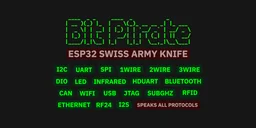
ESP32 Bit Pirate, a Hardware Hacking Tool with WebCLI That Speaks Every Protocol

ESP32 Bit Pirate is an open-source firmware that transforms ESP32-S3-based devices into a versatile, multi-protocol hardware hacking tool inspired by the Bus Pirate, offering a web-based or serial command-line interface to interact with digital and radio protocols such as I2C, SPI, UART, Wi-Fi, Bluetooth, RFID, and more, while supporting scripting, protocol sniffing, EEPROM flashing, and GPIO control across a range of compatible boards—with an emphasis on accessibility via browser, mobile, or standalone use, particularly on devices like the M5 Cardputer.

Comments ·
Entanglement Builds Space-Time. Now "Magic" Gives It Gravity

Entanglement Builds Space-Time. Now "Magic" Gives It Gravity

Physicists have discovered that "magic"—a measure of quantum complexity in quantum mechanics—plays a crucial role in giving space-time its gravitational flexibility, building on the holographic principle where space-time emerges from quantum entanglement. While entanglement provides the structure of space, recent work by Charles Cao and colleagues shows that magic, arising from non-Clifford quantum operations, enables space to bend in response to matter, fulfilling Einstein’s description of gravity and suggesting that gravity itself emerges from imperfect, highly complex quantum encoding rather than pristine quantum error correction.

Comments ·
Redis 8.8: New array data structure, rate limiter, performance improvements

Redis 8.8: New array data structure, rate limiter, performance improvements

Redis 8.8 introduces a new general-purpose array data structure for fast, index-based access, server-side aggregation, and efficient ring buffer implementations, along with a built-in window counter rate limiter, Streams message NACKing for better failure handling, subkey notifications for hash fields, support for multiple aggregators in single time series queries, explicit control over JSON numeric array storage types (BF16, FP16, FP32, FP64), and a new COUNT aggregator for sorted set operations, all accompanied by significant performance improvements across data types and operations.

Comments ·
Fine-tuning an LLM to write docs like it's 1995

Fine-tuning an LLM to write docs like it's 1995

The author fine-tuned a 7B LLM using a corpus of 1990s Microsoft technical documentation to recreate the style of period-specific tech writing, demonstrating that QLoRA-based fine-tuning on modest hardware can effectively transfer stylistic and structural elements from legacy manuals to modern models—producing convincing, era-appropriate documentation for both real and fictional APIs—while highlighting the challenges of data curation, parameter tuning, and the limitations of base versus instruct models, ultimately concluding that such fine-tuned models can augment but not replace human technical writers.

Comments ·

WiFi Time

The project describes an abandoned attempt to create a WiFi-based "fake GPS" module using an ESP8266 to emulate GPS time signals via NTP for use in a precision clock, aiming for sub-millisecond accuracy without additional hardware; despite achieving millisecond-level synchronization in ideal conditions, challenges with WiFi jitter, oscillator instability, and control loop tuning prevented reliable performance, leading to the project's abandonment in favor of more robust GPS timing solutions.

Comments ·
Tracing a powerful GNSS interference source over Europe

Tracing a powerful GNSS interference source over Europe

This paper identifies a space-based GNSS interference source responsible for numerous powerful, wide-area disruptions across Europe, Greenland, and Canada since 2019, using data from terrestrial GNSS reference stations collected between 2019 and 2026; it develops a detection framework based on received power, analyzes the interference's spatiotemporal and spectral characteristics, and combines received-power and time-difference-of-arrival measurements to confidently attribute the interference to a constellation of Russian early warning satellites in Molniya orbits, highlighting the growing threat of space-based jammers with extensive geographic reach.

Comments ·

What I've learned about the trombone

The trombone is a unique brass instrument that relies on a continuously adjustable slide for pitch control, making it distinct from fixed-pitch instruments like the piano; its playing technique involves mastering embouchure and slide positioning to navigate partials and produce accurate, in-tune notes. Unlike pianos tuned to equal temperament, trombonists can make real-time micro-adjustments using slide movement or lip tension, allowing for more acoustically pure intonation such as just intonation. The instrument’s continuous pitch capability enables true glissandos and greater tuning flexibility, but also demands heightened aural awareness and precision. Ultimately, playing the trombone well hinges on the interplay of physics, embouchure, and active listening to blend harmoniously within musical contexts.

Comments ·
Changing how we develop Ladybird

Changing how we develop Ladybird

Ladybird is discontinuing public pull requests to tighten its development process ahead of its first alpha release, limiting code contributions to project maintainers only due to evolving security risks and the diminished reliability of pull requests as a signal of contributor trustworthiness in the age of AI-assisted coding, while remaining open source and welcoming non-code contributions such as bug reports, testing, and technical feedback.

Comments ·
Azure Linux 4.0 is Microsoft's first general-purpose Linux

Azure Linux 4.0 is Microsoft's first general-purpose Linux

Microsoft has released Azure Linux 4.0 as its first general-purpose Linux distribution, now available in public preview for use on any Azure virtual machine, marking a shift from its previous role as a special-purpose OS limited to services like AKS and WSL. Built from a Fedora 43 base and derived through declarative, auditable overlays, Azure Linux 4.0 replaces custom tooling with mainstream components like dnf5 and includes enterprise-grade security features such as SELinux, FIPS 140-3 certification in progress, and comprehensive cryptographic signing and SBOM support. This release extends Microsoft’s investment in open source by offering a minimal, cloud-optimized, and transparently maintained Linux distribution that aligns with upstream Fedora while being purpose-built for Azure’s cloud environment. The move signifies Microsoft's full embrace of Linux as a first-class platform across its ecosystem, from infrastructure to developer tools.

Comments ·
C++: The Documentary

C++: The Documentary

C++: The Documentary is a YouTube film celebrating the 40-year history and resurgence of C++, tracing its evolution from Bjarne Stroustrup’s creation at Bell Labs to its current status as the fastest-growing major programming language, featuring insights from key figures like Stroustrup, Alexander Stepanov, and Chris Lattner, and covering milestones such as the development of the STL, standardization, C++11 modernization, and the language’s role in domains like gaming, finance, and scientific computing.

Comments ·
South Korean forums will need to scan every images with AI censorship tools

South Korean forums will need to scan every images with AI censorship tools

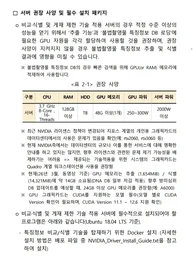
South Korea is implementing a new regulation requiring online forums and communities to use AI-powered tools to scan all user-uploaded images and videos for illegal content, including non-consensual pornography and material classified as child sexual abuse, effective July 1, 2026. Forum operators must independently acquire and install high-end hardware like datacenter-grade Nvidia GPUs to comply, imposing significant financial burdens—especially on smaller platforms—despite government provision of neither equipment nor subsidies. The regulation expands existing censorship practices, which have already led to overblocking of innocuous content, including anime, memes, and educational images, raising concerns about free expression. Critics argue the law reflects either governmental incompetence or an intentional effort to suppress independent online communities, further eroding digital freedoms in a country historically prone to strict censorship.

Comments ·
WSL 2 is getting faster Windows file system access

WSL 2 is getting faster Windows file system access

WSL 2 is improving cross-OS file system performance by implementing per-device DMA pools via a recent kernel update (Microsoft.WSL.Kernel 6.18.26.3-1), which eliminates shared SWIOTLB contention between virtio devices like virtiofs and the network adapter, significantly enhancing I/O efficiency for file-heavy workflows on Windows drives accessed from Linux; this optimization, enabled by setting virtiofs=true in .wslconfig and updating to the latest WSL kernel, marks another step in closing the performance gap originally introduced by the WSL 2 VM architecture.

Comments ·
Open Code Review – An AI-powered code review CLI tool

Open Code Review – An AI-powered code review CLI tool

Open Code Review is an open-source AI-powered CLI tool developed by Alibaba for automated, line-level code review, combining deterministic engineering with an agent-based LLM system to ensure comprehensive, accurate, and stable review outcomes, and supporting integration into CI/CD pipelines, coding agents like Claude Code, and customizable rule configurations for scalable and precise feedback.

Comments ·
I'm skeptical about efforts to revolutionize schooling

I'm skeptical about efforts to revolutionize schooling

The author, despite lacking formal experience in education, expresses skepticism toward radical reforms in schooling that emphasize project-based learning, real-world applications, and reduced emphasis on traditional instruction, arguing instead that evidence strongly supports direct instruction, structured practice, and mastery of foundational knowledge as the most effective methods for improving student outcomes. He contends that intuitive but unproven approaches—such as minimizing memorization in favor of "fun" or "authentic" learning—have been repeatedly tested and found inferior, citing large-scale studies and meta-analyses. While acknowledging room for improvement in efficiency and curriculum, he maintains that true expertise requires accumulating vast amounts of knowledge and skill through disciplined study, not shortcuts or technological gimmicks, and that methods like gamification or AI tutoring currently offer limited gains. The article ultimately defends a traditional, rigorous model of education as both more effective and more aligned with how brains actually learn, while cautioning that such methods may only work optimally with motivated learners—unlike the broader, more complex reality of public education.

Comments ·

Shopify outage [resolved]

A Shopify outage occurred between June 3, 09:27 EDT and June 3, 11:31 EDT (approximately 13:06–14:52 UTC), affecting access to Shopify admin, POS, storefronts, checkout, and Support due to an infrastructural issue; the problem was identified and mitigated by 14:22 UTC, with full resolution confirmed and monitoring completed by June 4, 00:45 EDT.

Comments ·

IPv6 zones in URLs are a mistake

IPv6 zones, necessary for disambiguating link-local addresses, introduce significant complexity when used in URLs because the percent sign (%) in the zone identifier must be percent-encoded (%25) to comply with URL syntax, leading to awkward and error-prone formatting; despite being specified in RFC 6874, this requirement creates poor developer experience and inconsistent support across browsers, libraries, and tools, exposing a fundamental flaw in how low-level networking details interact with high-level URL parsing conventions.

Comments ·

Branchless Quicksort faster than std:sort and pdqsort with C and C++ API

blqsort is a branchless quicksort implementation that outperforms std::sort and pdqsort by using sorting networks for small arrays, branchless partitioning with an auxiliary buffer, and optimized pivot selection, achieving significant speedups on modern CPUs, especially for trivially copyable types, with single-threaded performance up to 1.37x faster on Apple M1 and 2.7x faster on AMD Ryzen compared to std::sort, and nearly matching or exceeding pdqsort even in multi-threaded scenarios.

Comments ·
Do transformers need three projections? Systematic study of QKV variants

Do transformers need three projections? Systematic study of QKV variants

This study investigates whether transformers require three separate projections (query, key, value) in attention mechanisms by evaluating variants with shared projections—Q-K=V, Q=K-V, and Q=K=V—finding that Q-K=V performs nearly as well as standard QKV transformers while reducing key-value cache by 50%, with further reductions when combined with grouped or multi-query attention, enabling efficient on-device inference due to preserved representational capacity in a low-rank regime.

Comments ·
Samurai City

Samurai City

Tokugawa Edo (modern Tokyo) was a uniquely structured city that functioned as a political tool to control Japan’s elite, combining elements of a gilded prison and a consumption center where the agricultural surplus was funneled through state taxation to support a large, mostly idle samurai class; the shogunate required daimyo (feudal lords) to maintain families in Edo and alternate residence there, ensuring loyalty through hostage-like conditions, while rigid social zoning and urban design enforced hierarchy and surveillance, resulting in a vast, densely populated city that prioritized political stability over economic productivity, illustrating how urban form can be shaped by the imperatives of power and rent-seeking rather than growth or utility.

Comments ·
Mornings and nights no longer exist at 47C: A day in the hottest place in India

Mornings and nights no longer exist at 47C: A day in the hottest place in India

In Banda, Uttar Pradesh—one of India’s hottest districts—residents are enduring prolonged heatwaves with temperatures reaching 47–49°C, forcing major disruptions to daily life and work. With little access to cooling or respite, outdoor workers, farmers, and the urban poor have adapted by compressing their activities into early mornings and late evenings, enduring longer workdays and heightened health risks. The extreme heat, exacerbated by environmental degradation, groundwater depletion, and loss of tree cover, is part of a worsening climate trend affecting the densely populated Indo-Gangetic Plain. While the wealthy can insulate themselves, the poor face growing danger, as rising temperatures and humidity levels make survival itself a daily struggle—highlighting a deepening climate inequality.

Comments ·
KVarN: Native vLLM backend for KV-cache quantization by Huawei

KVarN: Native vLLM backend for KV-cache quantization by Huawei

KVarN is a native vLLM backend developed by Huawei that enables high-capacity, low-bit quantization of the KV-cache without sacrificing accuracy or throughput, delivering 3-5x more cache capacity and up to ~1.3x higher throughput than FP16 while maintaining FP16-level accuracy through a calibration-free, plug-and-play integration that requires only a single flag change in vLLM.

Comments ·
Anthropic's open-source framework for AI-powered vulnerability discovery

Anthropic's open-source framework for AI-powered vulnerability discovery

Anthropic provides an open-source reference implementation for autonomous vulnerability discovery and remediation using Claude, demonstrating a full recon → find → verify → report → patch pipeline focused on C/C++ memory vulnerabilities, with guidance on customization, sandboxing, and integration into security workflows—though the repository is unmaintained and intended only as a blueprint for building custom solutions, with production use recommended via Anthropic's managed Claude Security service.

Comments ·

Meta's ships facial recognition on smart glasses

Meta's Stella app for its smart glasses contains a fully assembled on-device facial recognition system—including face detection, alignment, and 2048-dimensional biometric embedding models, a cosine-similarity vector index, local storage, and a notification framework—verified as functionally operational in testing, though not currently enabled for general users or populated with server-side identity data. The system can detect faces, generate embeddings, search a local database, trigger a “Person recognized” notification on match, and store unrecognized faces with their biometric data for potential future labeling, but the user-facing interface elements and server synchronization necessary for live deployment are currently absent or inactive in the tested build. This indicates that while Meta has developed and shipped the complete technical foundation for real-time facial recognition on its devices, it remains disabled by default and gated server-side, representing a deliberate engineering investment whose deployment status is under Meta’s control.

Comments ·
When AI Builds Itself: Our progress toward recursive self-improvement

When AI Builds Itself: Our progress toward recursive self-improvement

Anthropic outlines its progress toward recursive self-improvement in AI development, showing how AI systems—particularly versions of Claude—are increasingly automating the engineering and research tasks required to build advanced models, resulting in dramatic productivity gains such as an 8x increase in code output per engineer and AI now writing over 80% of Anthropic’s production code. The company presents evidence that AI agents are not only executing well-defined tasks but also proposing and running complex research experiments with minimal human direction, suggesting a narrowing of the human role in AI development. While full recursive self-improvement—where AI systems autonomously design and train their successors—has not yet been achieved, current trends in task autonomy, code quality, and research judgment indicate it may be plausible in the near future, bringing transformative potential alongside significant risks related to alignment, oversight, and the pace of uncontrolled technological change. Anthropic advocates for research into verifiable mechanisms that could enable a coordinated pause in frontier AI development to ensure safety keeps pace with capability.

Comments ·

Retro-Tech Parenting

The author, a technologist and parent, shares a philosophy of intentional, retro-tech parenting that prioritizes independence, safety, and meaningful engagement for children by embracing pre-internet technologies like CDs, landline phones, and standalone family computers—curated and disconnected from the modern attention economy—to preserve the joyful, enriching aspects of technology while avoiding surveillance, addictive design, and uncontrolled access inherent in today’s digital platforms.

Comments ·